Product and offer
Decide how much inventory and customization the evidence justifies. Compare stocked, on-demand and custom products, then examine how bundles, pricing and guarantees change the buying decision and its economics.
A BOOK BY GEORGE RIVERA
Build the company that can stand behind every bottle you sell.
The campaign starts converting. Orders arrive. You're ready to spend more.
Then the next inventory payment comes due before the processor releases your money. Larger bundles move more bottles than the warehouse forecast expected. Refunds arrive, and the sales report doesn't explain what the company kept.
7-Figure Supplements by George Rivera helps you connect the marketing, economics and operating work behind those sales, so you can decide what deserves more money and what needs fixing first.
Get the book on AmazonView editions and current pricing on Amazon.
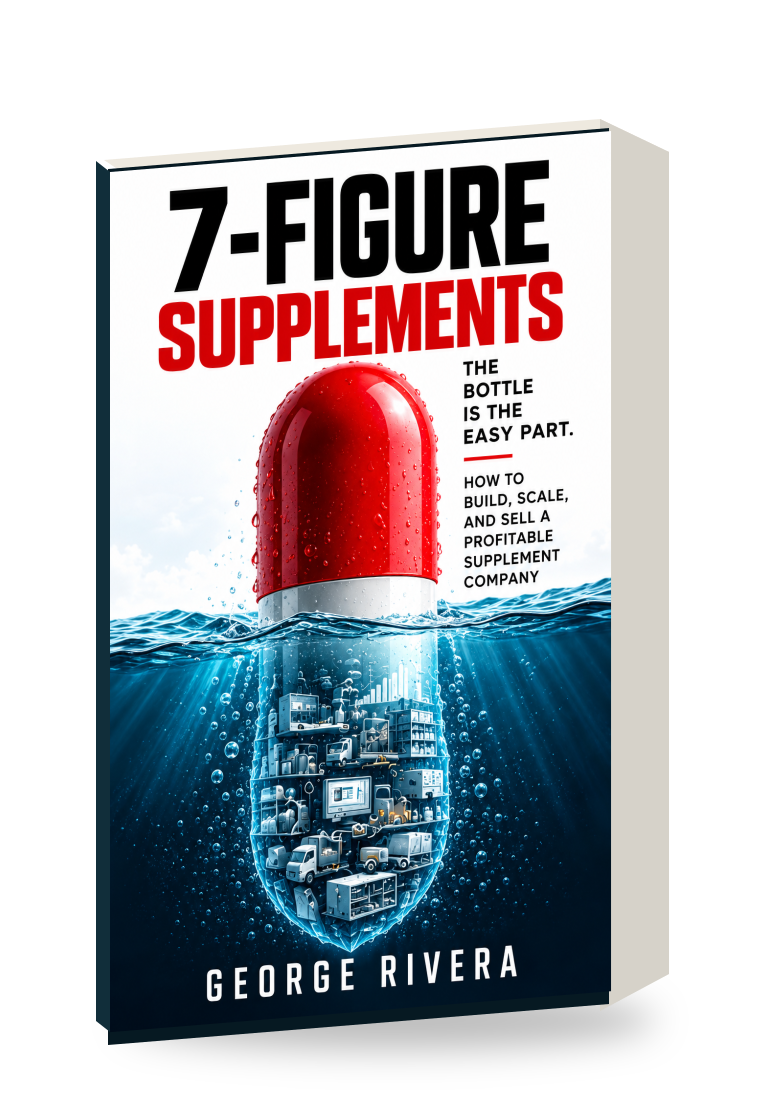
BUILD. SCALE. PREPARE TO SELL.
A campaign can produce orders while the company struggles to fund inventory, complete customer actions or explain the difference between its reports.
Before you increase spend, you need a clear view of what each customer leaves behind after acquisition, product, fulfillment, payment fees, refunds and service costs. You also need to know when the money becomes available and who can handle the work.
This book connects those questions. Its historical accounts and worked examples follow decisions from the first market test through the responsibilities and records another owner would inherit.
In February 2021, our team tested a different quantity structure on an established supplement funnel. We replaced one-, two- and four-bottle choices with one-, three- and six-bottle choices.
Larger packages could increase order value and give us more room to acquire customers. But conversion fell, especially on mobile, while average order value was virtually unchanged. We stopped that round.
A later round did increase cart value. Lower conversion still weakened the case for rolling it out.
Chapters 6 and 11 unpack the tradeoffs. You'll see how a change to the offer affects the economics for the company and the affiliates sending customers, and why a higher order value can be an insufficient reason to scale.
Decide how much inventory and customization the evidence justifies. Compare stocked, on-demand and custom products, then examine how bundles, pricing and guarantees change the buying decision and its economics.
Evaluate conversion, affiliate terms, upsells, refunds and repeat purchases together. Separate the customer value you've observed from the future purchases your forecast is counting on.
Map the stock, payment capacity, service coverage and cash timing a growth plan requires. Identify the commitments that arrive before the receipts and the function most likely to constrain the next increase.
Distinguish missing expertise from production, review or coordination gaps. Define what the owner must deliver, what they can decide and how the company handles an exception when you're unavailable.
Find the relationships, records and decisions that depend on you. Examine concentration, rights, diligence evidence and transaction terms to understand what another owner would receive and what exposure you might retain.
Build the Machine covers market, product, economics, positioning, offers, message, conversion, acquisition, monetization and retention.
Survive the Machine examines cash, payments, fraud, service, fulfillment, tracking, compliance and the people needed to support the business when its results change.
Make the Machine Transferable connects founder dependence, concentration, diligence, transaction terms and maintained operating capability. The final chapter applies the principles to a prospective design for a supplement company started for 2027.
Preparing to launch? Read in order, including the operating chapters that show what an early winner can require.
Already have an offer that sells? Start with the chapter closest to your current problem and follow its references into the functions affecting the answer.
Preparing to step back or sell? Begin with Part III and work backward into the economics, records and responsibilities the transition depends on.
For each decision, work through an example with your figures. Identify the evidence you have, what's still unknown, who owns the next action and when you'll review the result.
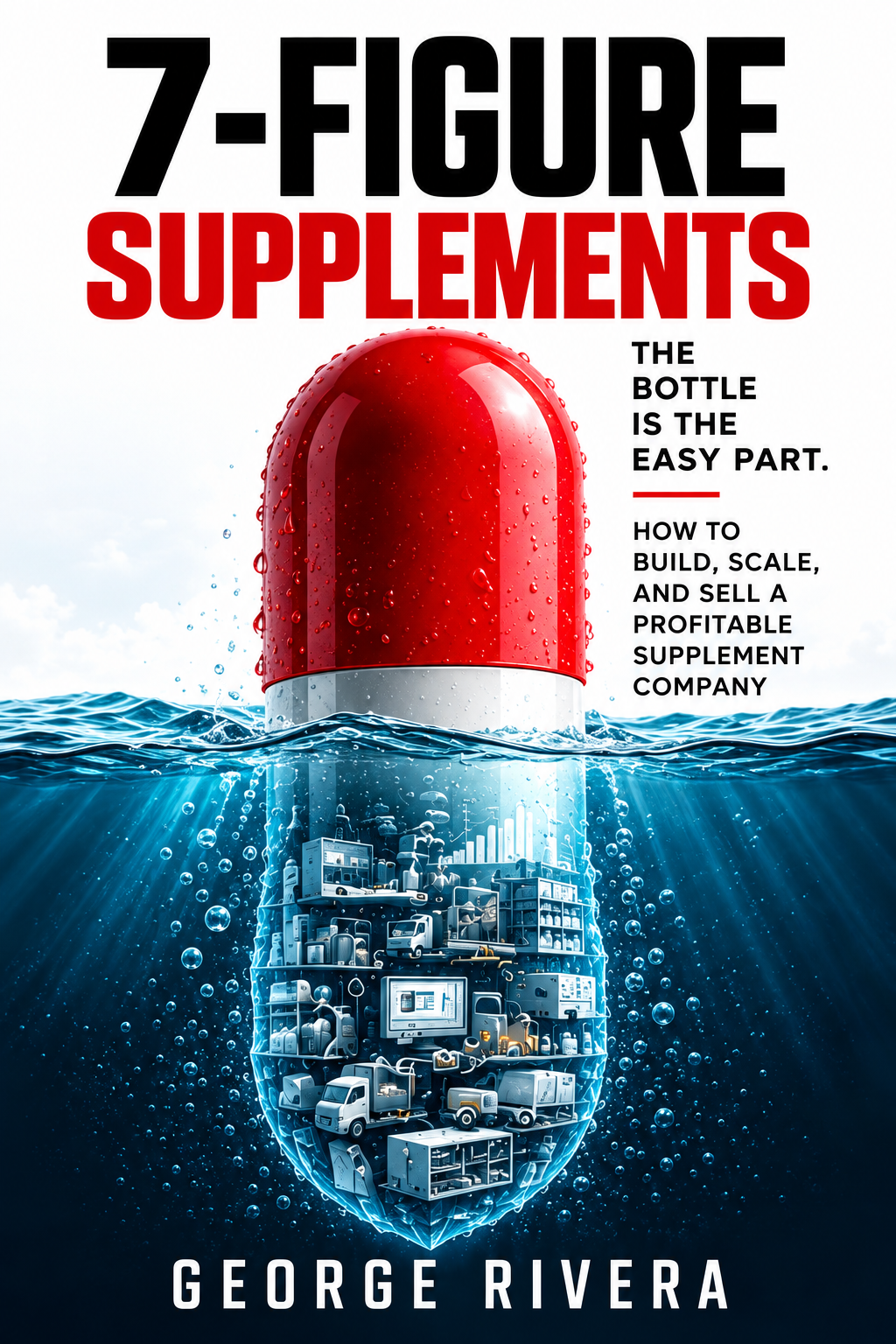
Choose the campaign, inventory order or staffing decision you're facing. Use the book to trace its economics, funding needs and operating consequences before you commit.
You'll have practical questions to ask, calculations to work through and a clearer basis for deciding whether to proceed, change the plan or hold.
Get the book on AmazonView editions and current pricing on Amazon.
If you'd like help working through a decision in your business, start by describing it.
Tell me what you sell, what's working, where the numbers or operations aren't making sense, and what you're considering next. Include the question you want help answering, whether it concerns growth economics, an operating dependency or the work that still runs through you.
Explore working with George